
Fremont County Criminal Court Cases
Fremont County belongs to Idaho's Seventh Judicial District. Felony matters begin in the Magistrate Division for the initial appearance and preliminary hearing, then move to District Court after an information or indictment. Magistrates also decide misdemeanors and infractions and hear city ordinance prosecutions. The small cities in Fremont County do not maintain separate independent municipal court databases.
The elected Clerk of the District Court keeps both divisions' files at the Fremont County Courthouse, 151 W 1st North in St. Anthony. The shared telephone number is 208-624-7200. The public counter is listed for weekdays from 8 a.m. to 5 p.m. and closes during lunch. A courthouse kiosk provides statewide iCourt information, while the clerk supplies view-only access, copies, audio, and eligible certified records.
Fremont Court Divisions at One Counter
A case's division reveals its route through the local system. The Magistrate Division handles misdemeanor trials, citations, initial appearances, preliminary felony proceedings, infractions, and municipal ordinances. District Court handles felony trials and sentencing after the case advances. Both use the same Fremont County courthouse and clerk contact, so a reader does not need to find a separate city court office.
| Court | Fremont County work | Public contact |
|---|---|---|
| Seventh Judicial District Court | Felony trials, sentencing, and matters within its appellate jurisdiction | 151 W 1st North; 208-624-7200 |
| Magistrate Division | Misdemeanors, infractions, first appearances, preliminary hearings, and ordinances | Same courthouse and phone |
Searching Fremont County Case Records
The Idaho iCourt Portal gives free basic case information and a register of actions. Search broadly first, then confirm the county, case category, and identifiers before treating a result as the correct person. The official tutorial explains the public interface and notes that sealed cases will not appear.
- Open iCourt and choose the public search.
- Search by party name or the Fremont case number.
- Limit the result to Fremont County and the criminal category.
- Open the likely case and record its status, charges, and register of actions.
- Ask the clerk for the exact pleading, order, judgment, audio, or certified copy needed.
| Search field | Use | Practical note |
|---|---|---|
| First and last name | Find party matches | Try aliases or spelling variants |
| Case number | Direct lookup | Fremont criminal numbers generally use CR43 |
| Location | Narrow the court | Select Fremont County |
| Case category | Reduce unrelated files | Choose criminal |
| Register and status | Read events and current posture | Open documents may still require the clerk |
Fremont iCourt Search in Practice
The official iCourt public portal is the statewide starting point for a Fremont County docket search.
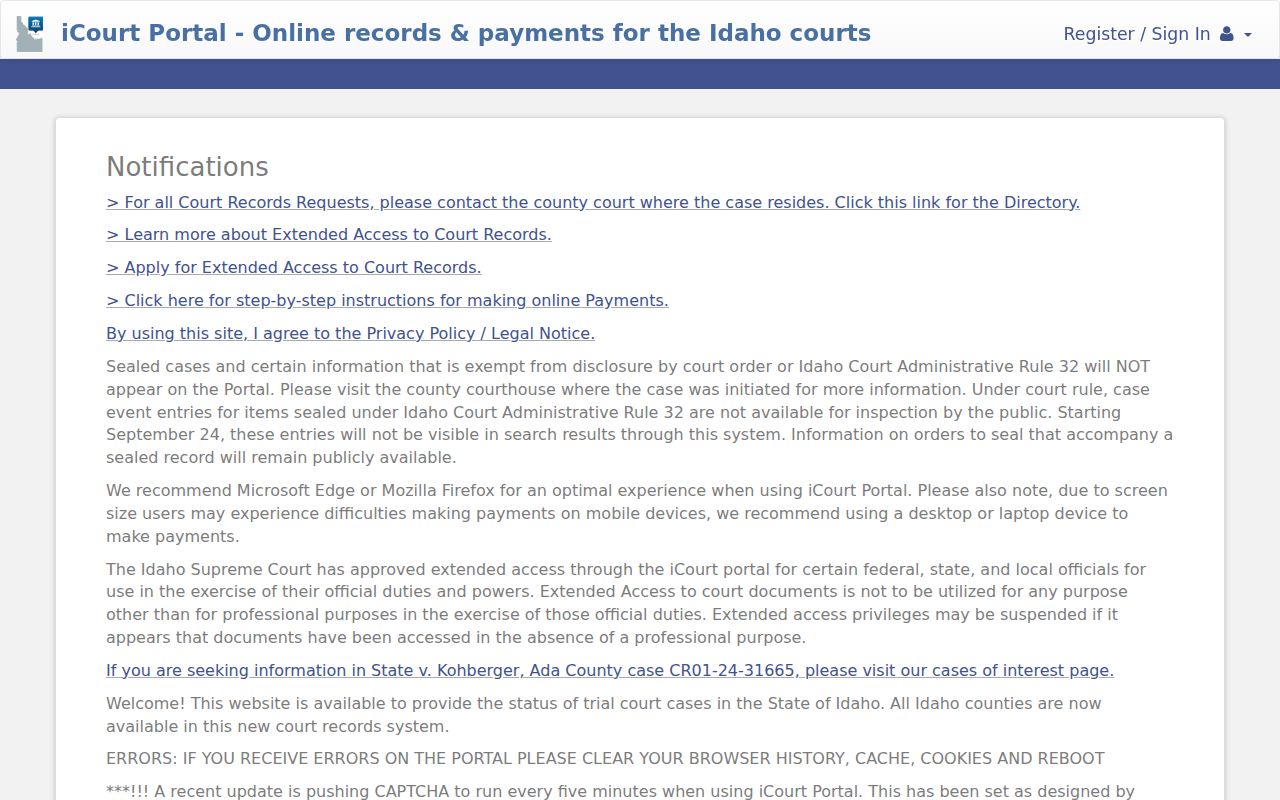
The portal image shows why a name is only the start: the county, category, case number, and docket details are needed to verify a match.
The Idaho courts' public-search tutorial illustrates the portal workflow and its access limits.
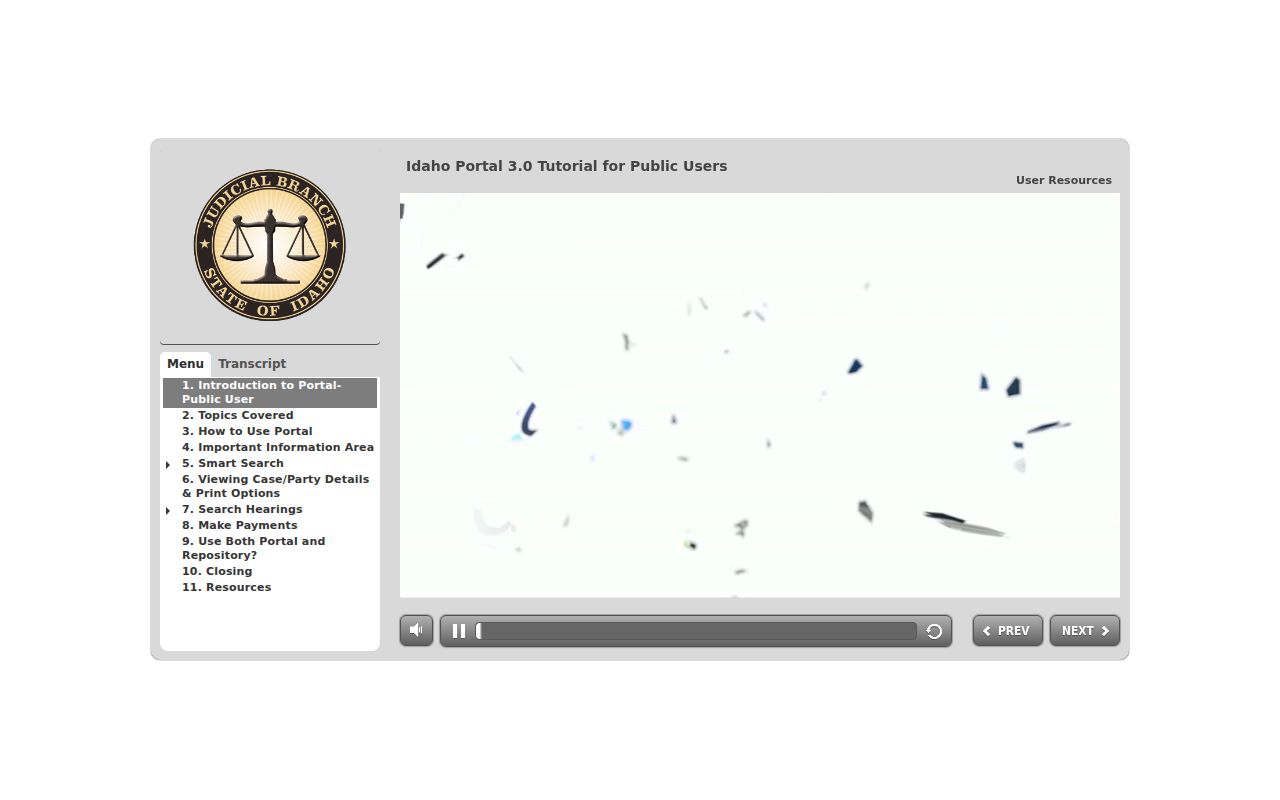
Its guidance helps a Fremont County searcher move from results to the register of actions without assuming that the online view contains the whole file.
Inside a Fremont County Case File
The court file records what the prosecutor filed and what the judge did. That differs from a sheriff report or booking sheet, which records the arrest and custody intake. A register of actions is a chronology, not every document behind each entry. For a precise outcome, obtain the disposition or judgment rather than relying on a charge label in a search list.
| Case number and court | The CR43 identifier, division, and Fremont County venue. |
|---|---|
| Charging document | The complaint, information, indictment, or citation setting out filed allegations. |
| Docket entries | The dated register of filings, hearings, orders, and court activity. |
| Hearing dates | Past and scheduled appearances, subject to later changes. |
| Disposition and judgment | Conviction, dismissal, acquittal, or other recorded resolution. |
| Sentence and conditions | Custody, probation, restitution, or other terms imposed by the court. |
Request Fremont Court Documents
The county judicial-record form is the route to actual documents when iCourt supplies only an index. It asks for the requester's contact information, case number and name, case type, and the precise documents or hearing audio sought. A reason or relationship may be required for confidential, sealed, or exempt material, and the clerk can refer a request for judicial review.
Fremont County lists copies at $1 per page and certification at $1 per stamp. Audio and any credit-card charge are calculated by the clerk. A case number greatly reduces ambiguity. If it is unavailable, provide the party name, likely filing period, criminal case type, and the document description. The clerk's fax is 208-624-4607.
The Idaho court records guidance explains the difference between iCourt information, courthouse kiosks, clerk requests, and courtroom camera approval.
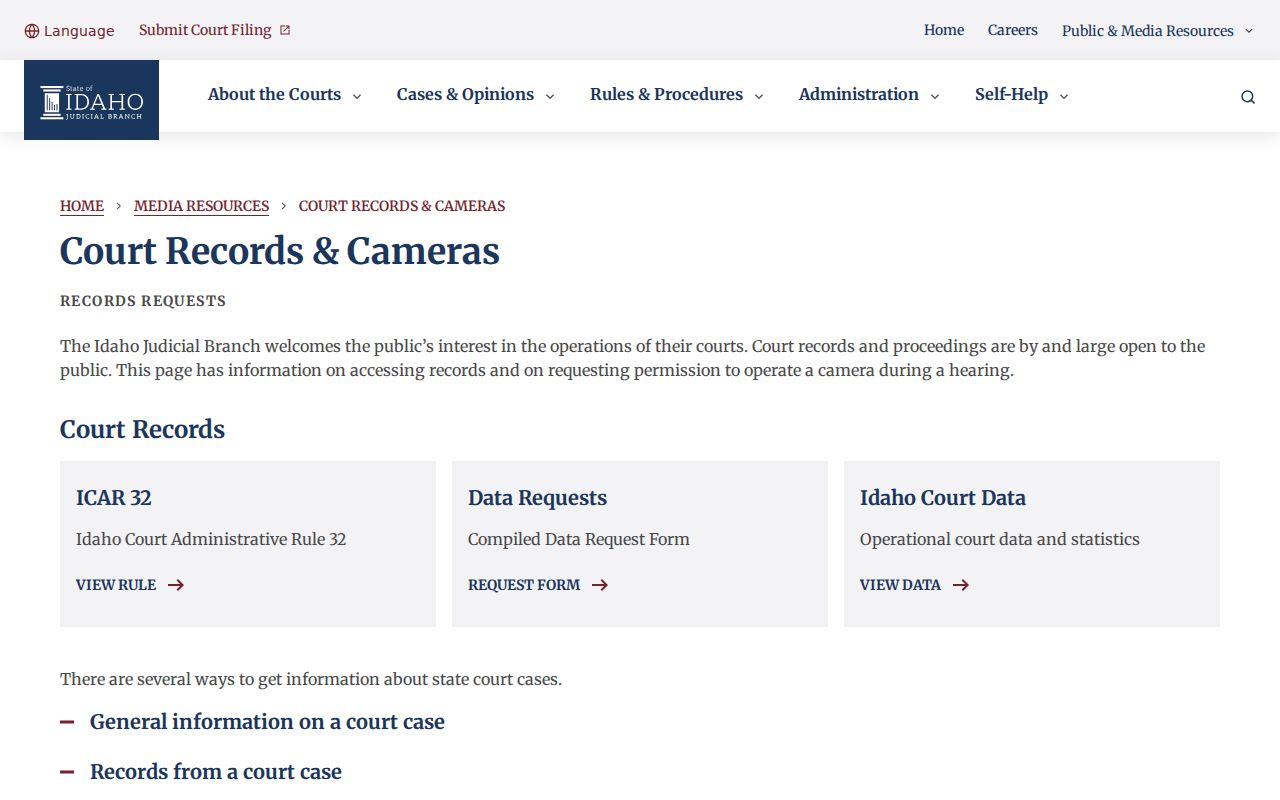
For Fremont County, that layered model means the online register can guide a request, while the clerk remains the source for the filed item itself.
How a Fremont Criminal Case Moves
Filed charges begin the court record, but the division and later events depend on offense level. A felony ordinarily begins before a magistrate, where rights, custody, counsel, and probable cause are addressed. If the felony proceeds, District Court handles the later plea or trial and sentence. A misdemeanor remains with the Magistrate Division. Entries can change as the prosecutor amends or dismisses counts.
Case flow: Charges Filed › Arraignment › Pretrial › Plea or Trial › Disposition › Sentencing
The docket should be read in date order. A complaint shows what began the case; a later information may define the felony prosecution; a judgment or dismissal states the recorded result. The Fremont County arrest lookup explains why the initial booking allegation may differ from these court-filed charges.
Reading Fremont CR43 Case Numbers
Fremont criminal files generally carry the CR43 prefix. The identifier is the best key for moving between iCourt, a kiosk, and a clerk request because names can be shared or spelled in more than one way. Record the full number exactly as displayed, together with the court division and party name.
A CR43 number does not itself prove a conviction or reveal the whole outcome. Open the register of actions, then locate the final order, dismissal, judgment, or sentence. Terms such as withheld judgment, dismissal, acquittal, and set-aside describe different events. A dismissed charge can also remain part of the historical case record unless Idaho's separate shielding rules apply.
When Fremont iCourt Finds Nothing
No result is not proof that no case exists. A spelling difference, an older file, another Idaho county, a recent filing delay, or a legally sealed or shielded case can account for an empty search. Try aliases, confirm the county, and search with a known case number. Then telephone or visit the Fremont County clerk and ask whether the kiosk or paper index offers another route.
Pending unreturned warrants and related affidavits may be withheld under Idaho Court Administrative Rule 32. Juvenile matters, protected victim data, medical material, presentence reports, and sealed or shielded records also have access limits. The public view can redact protected information while leaving the rest of an otherwise open record available.
Fremont Case Record Access and Restrictions
Idaho Court Administrative Rule 32 governs access to judicial records. It distinguishes open court material from exempt, sealed, redacted, and shielded content. Fremont County administrative and sheriff records use the Idaho Public Records Act and JustFOIA, but a judicial case request belongs with the court clerk. Sending the right request to the right custodian avoids needless delay.
A qualifying case may be shielded under Idaho Code section 67-3004, while section 19-2604 provides a distinct dismissal or set-aside remedy in eligible circumstances. Neither should be treated as automatic erasure. The official set-aside statute shows the legal conditions behind that distinction.
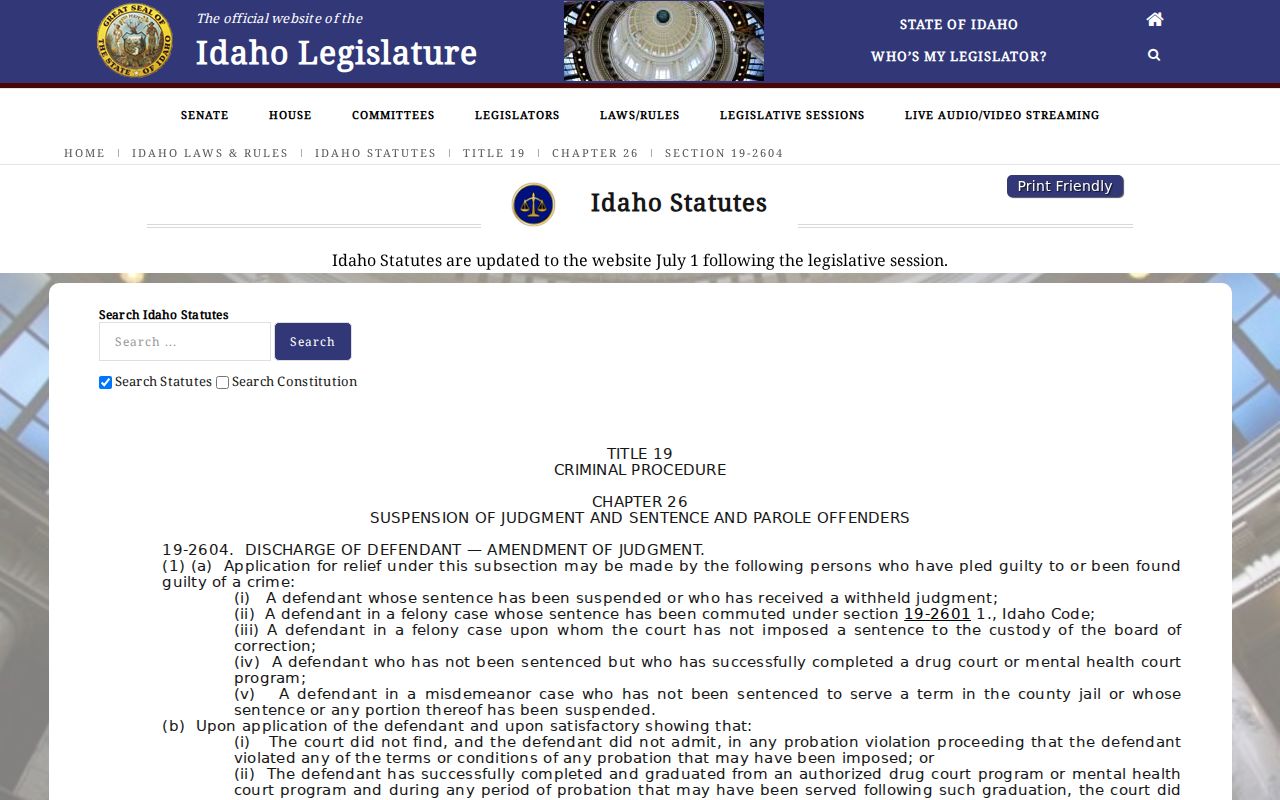
The statute image reinforces why a searcher should read the actual Fremont order instead of labeling every form of relief an expungement.
The official court access rules identify the governing categories for public and restricted judicial records.
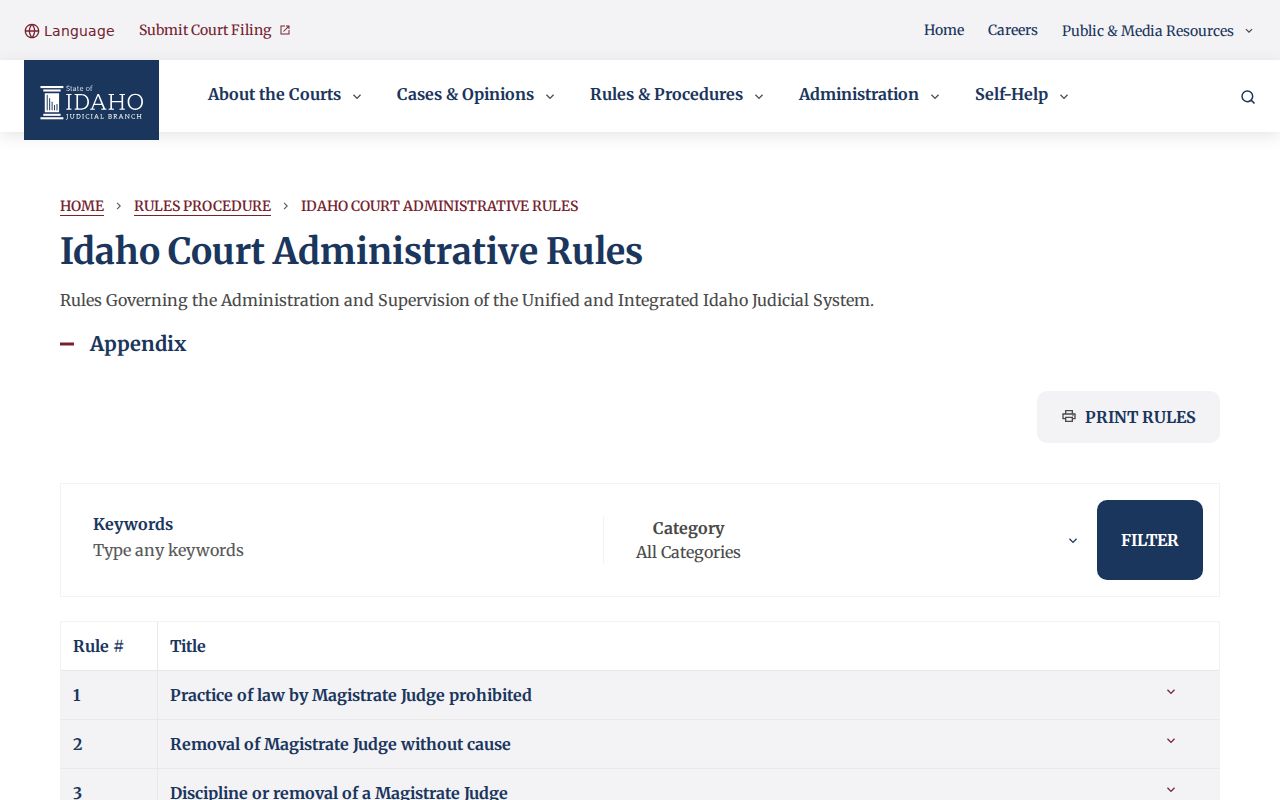
These rules explain why an online omission may reflect lawful protection rather than a broken search.